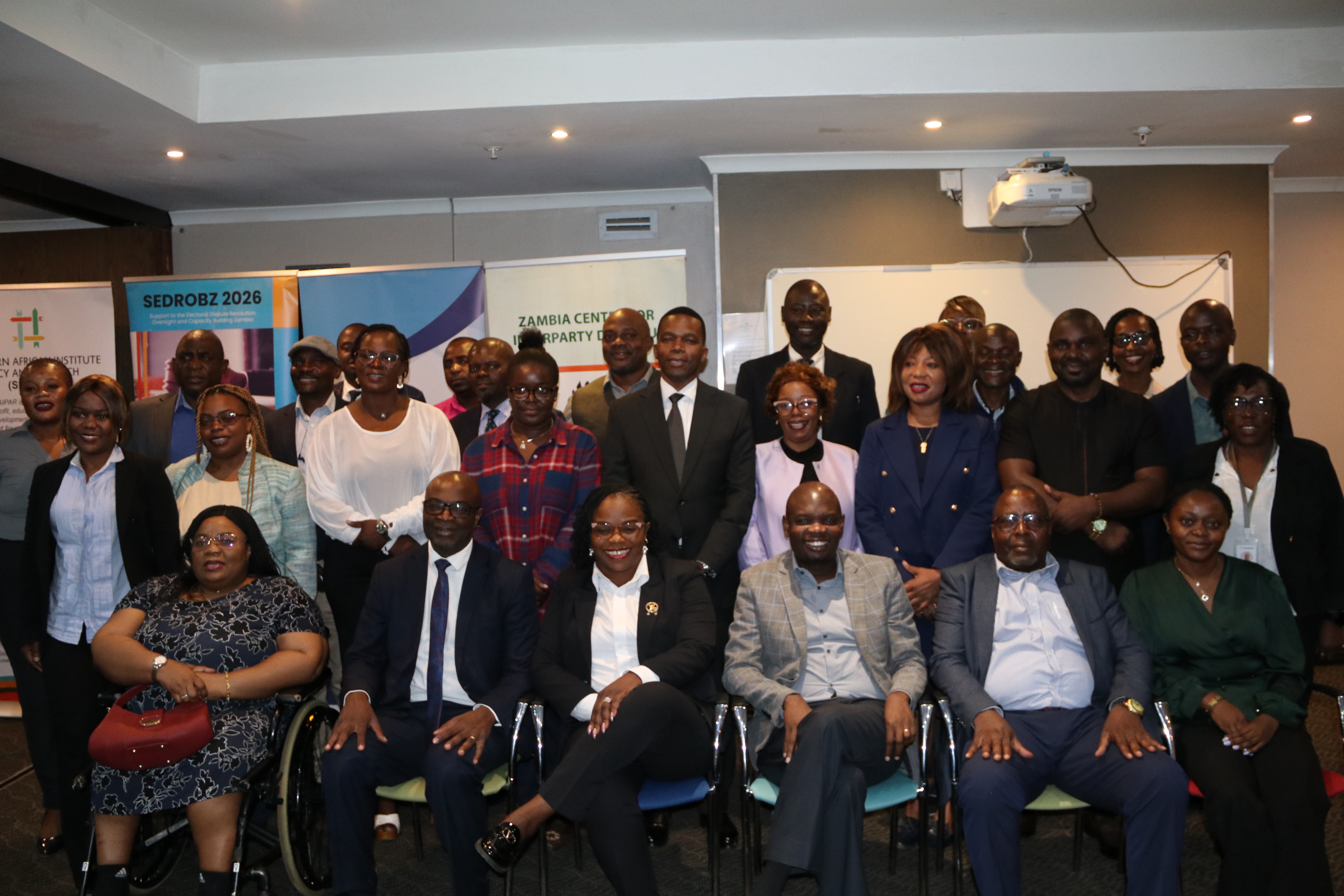
LUSAKA: Political party representatives are increasingly shifting toward formal legal channels to resolve election grievances ahead of the 2026 General Elections, according to a post-training report released by SEDROBZ. The report highlights a high-level Electoral Dispute Resolution (EDR) workshop that addressed gaps in procedural knowledge while introducing new content on electoral rights, the Mixed Member Proportional Representation (MMPR) system, gender-responsive access to EDR, and evidence preservation. Although nearly 38% of participants had previous experience with electoral disputes, only 22.2% had received formal training on the legal frameworks governing them.
The workshop combined interactive presentations with practical drafting exercises on objection letters, Conflict Management Committee (CMC) complaints and election petitions. Participants also practiced calculating filing timelines and explored constitutional electoral rights, political parties' responsibility to resolve disputes through lawful mechanisms, and the importance of timely complaints and evidence preservation. Sessions further examined Zambia's administrative and adjudicative EDR processes, including Electoral Commission of Zambia (ECZ) procedures, CMCs, court processes and circumstances under which both channels may be used concurrently.
Recognising the challenges faced by women candidates, the programme included a dedicated session on improving women's access to EDR. Discussions covered gender-based political violence, financial and cultural barriers to seeking legal remedies, and political parties' responsibilities to establish safe reporting mechanisms, legal accompaniment and psychosocial support. Participants also examined regional and continental commitments on gender equality while developing internal protocols to support women candidates and monitor reserved seats.
With the introduction of the MMPR system, participants received practical guidance on proportional representation seat allocation, preparation of compliant party lists, and documentation requirements for women, youth and persons with disabilities. Using practical checklists, participants also explored potential MMPR-related disputes, including party list disagreements, seat allocation challenges and vacancies subject to judicial review, strengthening their preparedness for Zambia's evolving electoral system.
The workshop concluded with a focus on evidence collection and preservation, including digital evidence management, inventory logs and effective polling agent deployment. Representatives developed party-specific action plans for the 13 August 2026 elections, outlining systems for standardised evidence collection, reporting pathways and internal compliance. Many committed to establishing internal conflict resolution teams, strengthening evidence management systems and cascading legal knowledge to grassroots members to promote peaceful dispute resolution.
While participants demonstrated a strong understanding of the Electoral Commission of Zambia (ECZ), Conflict Management Committees (CMCs), and the courts and tribunals responsible for electoral disputes, the report identified internal party coordination as an area requiring continued support. Participants recommended expanded simulation-based training, including mock hearings, real-time drafting exercises and scenario-based response drills, to further strengthen lawful, evidence-based electoral dispute resolution ahead of the 2026 General Elections.